For a first trip, Naxos — big enough for a real town, small enough to cross in an hour, works for families and couples alike. Santorini if the caldera view is the whole point and you’re fine paying for it. Paros if you want Santorini’s look without the crowds. Past that, it depends on whether you want Cyclades white-and-blue or the greener, quieter Ionian islands.
Greek island trips are where I send people who’ve done the Caribbean and want the ferry-hopping version of an island holiday — something the Caribbean genuinely can’t offer the way the Aegean can. I’ve guided small groups through the Cyclades and a few Ionian islands over the years, and the question is almost always some version of “just tell me which one.”
Is a Greek island trip the right call for your trip?
If what you want is whitewashed hillside towns, genuinely excellent ferry connections between islands, and food that’s part of the trip rather than an afterthought, yes. The trade-off, and it’s a real one: the most photographed islands (Santorini, Mykonos) are also the most crowded and expensive by a wide margin, and neither is the easiest or cheapest choice if you haven’t been to Greece before.
Don’t try to combine Santorini and Mykonos with a third island in one week. Ferry crossings eat more of a day than they look like on a map, especially island-hopping in high season when boats fill up and schedules shift. Two islands, three at most, and build in a buffer day.
My picks, by what you’re actually looking for
Best all-rounder, first trip: Naxos
The Cyclades island that works for a family and a honeymoon at once — a proper town (Chora) with real nightlife if you want it, and nine kilometres of shallow west-coast beach that makes it genuinely good for small children.
The meltemi wind blows hard on that same west coast in July and August — if you’re set on flat, still water in peak summer, check the forecast or lean toward the more sheltered east side.
The postcard, if budget allows: Santorini
The caldera view from Oia at sunset is genuinely worth seeing once. It’s also the most expensive and crowded island on this list by a wide margin, with black and red volcanic beaches rather than the soft white sand people sometimes expect. Book caldera-view accommodation months ahead in summer, or don’t bother — the alternative isn’t worth the premium.
Same look, fewer crowds: Paros
If Santorini’s the one you keep picturing but the price and crowds put you off, Paros gives you a very similar Cycladic aesthetic — narrow whitewashed lanes, blue-domed churches — at a noticeably lower cost and pace. It’s also become a real foodie destination in its own right over the last several years.
Greener and quieter: Corfu (Ionian)
A genuinely different Greek island — more Venetian and Italian in its architecture and history than the Cyclades, lusher and greener, and calmer water on the east coast. Good for families who want a gentler pace than island-hopping demands.
Nightlife, if that’s actually the point: Mykonos
I’d steer most first-timers away from Mykonos toward Naxos, but if a real party scene is genuinely what you’re booking, Mykonos does it better than anywhere else in the Cyclades — beach clubs, late nights, and a level of polish (and pricing) to match. The catch is the same crowding and expense that hits Santorini, without Santorini’s caldera view to show for it.
Underrated, worth the extra ferry leg: Milos
Milos gets a fraction of Santorini’s visitors despite genuinely dramatic volcanic coastline — Sarakiniko’s white lunar-looking rock formations are the single most distinctive beach scene in the Cyclades, and it’s still quiet enough in most of the season to feel like you found it yourself. The trade-off is connectivity: fewer direct ferries than the bigger-name islands, so it usually needs to be planned as part of a route rather than a solo destination.
A different Greece entirely: Rhodes (Dodecanese)
If the Cyclades’ white-and-blue look isn’t actually what you’re after, the Dodecanese island group — closer to Turkey than to Athens — gives you a genuinely different Greece: a medieval walled Old Town in Rhodes City that’s a UNESCO World Heritage Site, plus beaches that don’t require the same ferry-hopping logistics as the Cyclades. It’s a separate trip, not an add-on to a Cyclades itinerary — the ferry connections between island groups are far less frequent than within one group.
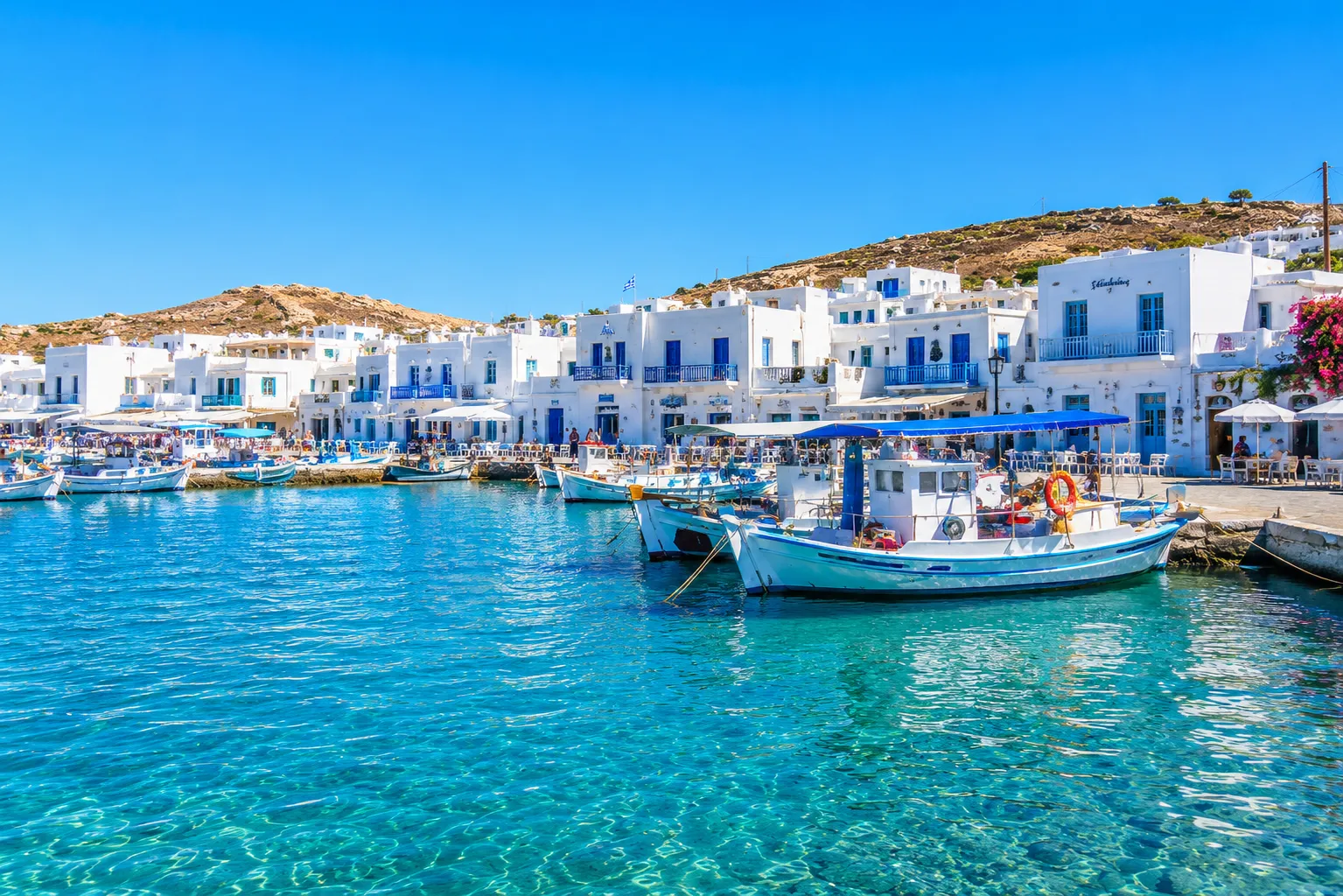
The island groups, briefly explained
Greece has thousands of islands, but almost every trip worth planning falls into one of three groups, and mixing groups in one trip usually costs you a flight, not just a ferry:
- The Cyclades (Naxos, Santorini, Paros, Mykonos, Milos) — the white-and-blue postcard look, the best ferry connections for island-hopping, and where most first Greek island trips should focus.
- The Ionian (Corfu, and further south Kefalonia, Zakynthos) — greener, wetter, more Italian- and British-influenced history, calmer water, generally quieter than the Cyclades in peak season.
- The Dodecanese (Rhodes, and further out Kos, Symi) — closer to Turkey than to mainland Greece, with a different architectural history (Rhodes’ Old Town in particular) and its own separate ferry network.
Best time to visit
Late May through mid-June and September are the shoulder-season sweet spot — sea temperature is already comfortable (or still is, in September), crowds are meaningfully thinner than peak summer, and prices drop noticeably from the July–August highs. The meltemi, a strong seasonal north wind, is at its most disruptive in the Cyclades specifically during July and August, which can affect ferry schedules as well as beach conditions.
Greece is in the Schengen Area — US citizens don’t need a visa for stays under 90 days within a 180-day period, but do need a passport valid for at least three months beyond your departure date. Worth double-checking current entry requirements before you book, since Schengen rules do shift.
Heads up: some links below are affiliate links. If you book through one, I may earn a small commission at no extra cost to you. I only link to places and tours I'd actually send my own family to — if something's not worth it, I'll tell you.
Compare Greek island ferry and hotel rates →Placeholder link — swap for a real, approved affiliate program before this page goes live.Questions people ask
What is the best Greek island to visit?
For a first trip, Naxos — big enough to feel like a real place with a proper town, small enough to cross in under an hour, and it works for families and couples both. Santorini if the caldera view is genuinely the point and you don't mind the crowds and prices that come with it. Corfu if you'd rather have a greener, more Italian-influenced island than the classic white-and-blue Cyclades look.
Which Greek island has the best beaches?
For classic Cyclades sand, Naxos's west coast — nine kilometres of it, shallow and family-friendly. For something dramatically different, Santorini's Red Beach and Perissa have volcanic black and red sand instead of the postcard white. Zakynthos (Zante), in the Ionian, has Navagio (Shipwreck Beach), which is one of the most photographed beaches in the country for a reason.
What are the best islands in Greece for a honeymoon?
Santorini is the obvious answer and it earns it for sunset views and caldera-side hotels, but it's also crowded and expensive in peak season. Paros is my quieter alternative — same Cycladic look, real romance, noticeably less overrun, and cheaper.
When is the best time to visit the Greek islands?
Late May through mid-June, or September, are the sweet spot — warm sea, thinner crowds, and meaningfully lower prices than July and August, when both the heat and the meltemi wind pick up in the Cyclades specifically.
What is the best Greek island for families?
Naxos or Corfu. Naxos's west-coast beaches are shallow and calm, which matters more with small kids than any other single factor. Corfu is greener and has a gentler pace, plus more resort-style family accommodation than the smaller Cyclades islands.
Which Greek islands have the best beaches for something different?
Milos, if you want scenery rather than just sand — Sarakiniko's white volcanic rock formations don't look like anywhere else in Greece. It's quieter than Santorini too, mainly because ferry connections there are less frequent, so it takes a bit more planning to reach.
Should I visit the Cyclades or the Dodecanese?
The Cyclades for a first trip — better ferry connections, the look most people picture when they picture Greece, and islands like Naxos and Paros that work for almost any travel style. The Dodecanese, especially Rhodes, if you specifically want medieval architecture and a slower pace, and don't mind that it's a separate trip rather than an easy add-on.