May, September, or October — dry-season weather without July and August’s peak crowds and peak prices. The full dry season runs June through September if guaranteed sun matters more than cost. Cyclone risk is real but genuinely low; French Polynesia sits on the edge of the South Pacific cyclone belt, not the middle of it.
Bora Bora is a splurge destination almost by definition — overwater bungalows aren’t a budget category anywhere — which makes the seasonal price swing here matter more than it would somewhere cheaper to begin with. The weather answer is simple. The money answer is where most guides go quiet.
Dry season vs. wet season, and what it actually costs
Dry season (May through October) is the reliable-weather answer: lower humidity, calmer lagoon water, and the best conditions for snorkeling and the overwater-bungalow photos Bora Bora is known for. Wet season (November through April) brings more rain and the technical cyclone-season window, but it’s also when rates drop hard — peak dry-season overwater bungalows that run close to $1,000 a night can fall to roughly a third to half of that in the December–March low season (excluding the Christmas and New Year weeks, which spike regardless of season).
Most guides that cover Bora Bora’s timing skip real numbers entirely and send you elsewhere for pricing. The honest version: the seasonal swing is large enough that it should genuinely factor into when you book, not just whether you’re willing to risk a rainy afternoon.
Best time, by what you’re actually planning around
Best overall balance: May, September, October
Dry-season weather, meaningfully thinner crowds than the July–August peak, and better rates than the busiest months without dropping into true wet-season risk.
Best for a honeymoon: May–June or September–October
The same shoulder-season logic applies, with the added bonus of a less crowded lagoon for the photos and boat excursions honeymoons tend to build a day around.
Best value: December–March, skip the holidays
The real low season. Expect a genuine chance of rain and the cyclone-season label technically applying, but also the lowest overwater bungalow rates of the year and the easiest resort availability.
If whale watching matters: July–November
Humpback whales migrate through French Polynesian waters in this window, which conveniently overlaps most of dry season — a reason to lean toward the later end of peak season rather than a reason to travel in the rain for it.
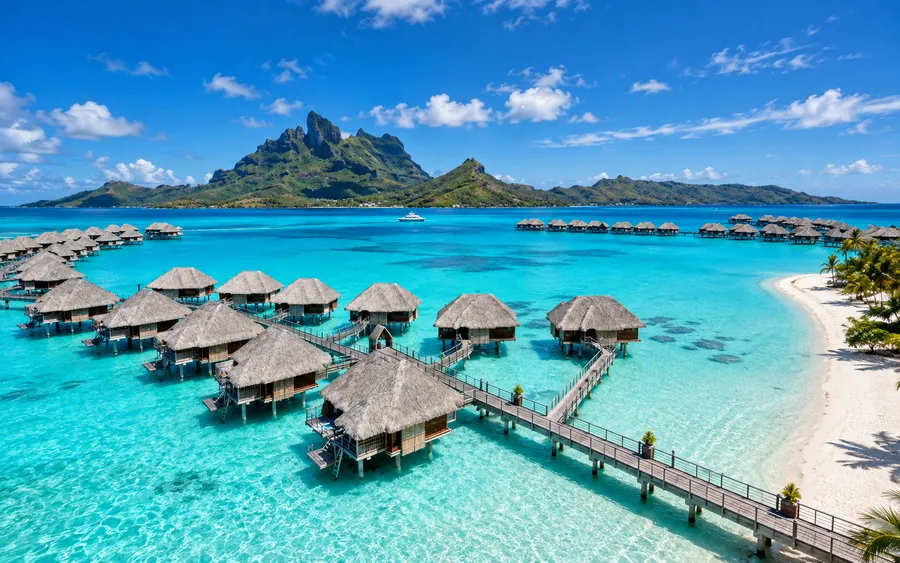
July and August stack three things at once: peak dry-season weather, peak whale season, and the Heiva festival crowd effect rippling out from Papeete (nearly every Bora Bora flight connects through there). It’s the best weather of the year and the most expensive, most booked-up version of the trip — plan months ahead if that’s the window you want.
Heads up: some links below are affiliate links. If you book through one, I may earn a small commission at no extra cost to you. I only link to places and tours I'd actually send my own family to — if something's not worth it, I'll tell you.
Compare Bora Bora resort rates by season →Placeholder link — swap for a real, approved affiliate program before this page goes live.This is one piece of a bigger Best Tropical Vacation Destinations guide, if you're still deciding where to go.
Questions people ask
What is the best time to visit Bora Bora?
May, September, or October — you get the dry season's reliable sun and calm lagoon without July and August's peak crowds and peak prices. June through September is the full dry-season window if flexibility on price matters less than guaranteed clear skies.
When is the best time to go to Bora Bora for the lowest prices?
December through March, excluding the Christmas and New Year weeks. Overwater bungalow rates can drop by half or more compared to peak dry season — the trade-off is a real chance of rain and the (low but nonzero) cyclone-season window.
Is Bora Bora in a cyclone zone?
Technically yes, but genuinely low-risk — French Polynesia sits on the eastern edge of the South Pacific cyclone belt, and direct hits on Bora Bora specifically are rare. Most of the wet-season risk is heavy rain and humidity, especially January through March, rather than an actual storm.
When can you see whales in Bora Bora?
July through November, with humpback whales migrating through French Polynesian waters to breed. It overlaps with both dry season and the island's busiest, most expensive months, so it's rarely a reason to pick a different window on its own — more a bonus if you're already going then.
What is the Heiva festival?
French Polynesia's biggest cultural celebration — traditional dance, music, and sports competitions, centered on Papeete in July. It's a Tahiti-based event more than a Bora Bora one specifically, but it affects flights and hotel demand across French Polynesia during that window since nearly everyone connects through Papeete.
Does the wet season in Bora Bora mean it rains all day?
No — even in the wettest months, rain tends to come as short, passing tropical showers rather than an all-day washout. It's a real trade-off worth knowing about, not a reason to rule out the low season entirely if the price difference matters to your trip.