December through May for warmer air, calmer water, and the most comfortable swimming and snorkeling. June through November for the richer wildlife-watching and diving season, driven by the cool Humboldt Current. May or November, right at the crossover, if you want a genuine balance of both rather than picking a side.
The season question has a simple answer, and almost every Galápagos guide gives it to you: warm and wet, or cool and dry, pick one. What most of those same guides don’t actually follow through on is the more useful question — which specific animals are doing what, in which specific month. A lot of pages promise a “wildlife calendar” in a heading and then never deliver the actual month-by-month detail. That’s the part worth getting right before you book.
Warm/wet season vs. cool/dry season, and what each actually means
Warm, wet season (December–May) brings air temperatures into the high 80s to low 90s°F and only intermittent rain, with calm, warm water that makes for the most comfortable swimming and snorkeling of the year. Cool, dry season (June–November) trades that comfort for rougher seas and cooler air, but it’s driven by the Humboldt Current — the same current responsible for pulling in whale sharks, migrating humpback whales, and the larger schools of fish that make this the stronger diving stretch of the year.
Neither season is objectively “better” — it genuinely depends on whether you’re there primarily to swim and snorkel in comfort, or to dive and see the widest range of marine wildlife. Most generic guides frame one season as the clear winner; the honest answer is that they’re optimized for different trips.
The real wildlife calendar, month by month
- January–April — green sea turtles nest on the beaches, blue-footed boobies are into their courtship dance, waved albatrosses start returning to Española Island in March, and by April tortoise eggs begin hatching alongside peak seabird courtship activity across the islands.
- May–August — blue-footed boobies and frigatebirds are actively nesting in May, and whale sharks peak specifically around Darwin and Wolf Islands the same month. Humpback whales start appearing in June. Booby courtship hits its peak in July alongside flightless cormorant chicks hatching, and August brings playful sea lion pups and generally abundant marine life.
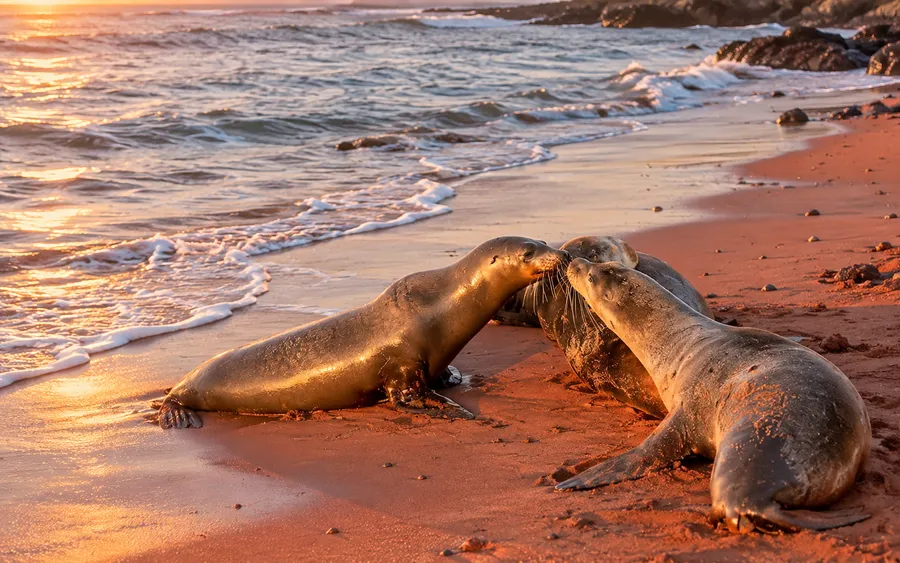
- September–December — seabird hatchlings (blue- and red-footed boobies, albatrosses, frigatebirds) are visibly growing, sea lion pups get more active, and by November the season crosses back over into warmer, calmer conditions.
My picks, by what you’re actually there for
Best for comfortable swimming and snorkeling: February–April
The warmest water of the year, well inside the wet season, with the added bonus of green sea turtle nesting and blue-footed booby courtship already underway.
Best for wildlife diversity and diving: June–August
The start of the cool season brings humpback whales, peak booby courtship, and hatching cormorant chicks all in the same stretch — the richest overlap of marine and bird activity on the calendar.
Best for whale sharks specifically: May
A narrow window, and specifically around Darwin and Wolf Islands rather than the archipelago generally — worth confirming your itinerary actually reaches that far north if this is the priority.
Best for fewer crowds without sacrificing much: June or November
Both sit right at a seasonal crossover, so you’re not giving up much on weather to get there with noticeably fewer other visitors around.
The Galápagos caps the number of licensed vessels and visitor permits at any given time, and the smaller, better-rated boats fill up well before the generic ones do. If you have a specific boat or an exact month locked in, that’s not a trip to plan a few weeks out — book earlier than you would for a typical Caribbean or Hawaii itinerary.
Heads up: some links below are affiliate links. If you book through one, I may earn a small commission at no extra cost to you. I only link to places and tours I'd actually send my own family to — if something's not worth it, I'll tell you.
Compare Galápagos cruise and tour options →Placeholder link — swap for a real, approved affiliate program before this page goes live.This is one piece of a bigger Best Islands to Visit guide, if you're still deciding where to go.
Questions people ask
What is the best time to go to the Galápagos Islands?
December through May for the warm, wetter season — calmer water and the most comfortable swimming and snorkeling temperatures. June through November for the cool, dry season — rougher water but the richest wildlife-watching and diving, driven by the nutrient-rich Humboldt Current. May and November, right at the seasonal crossover, tend to offer a genuine balance of both.
What is the best month to see whale sharks in the Galápagos?
May, and specifically around Darwin and Wolf Islands in the far north of the archipelago — a dive-focused add-on most standard cruise itineraries don't include, worth checking for specifically if whale sharks are the priority.
When do blue-footed boobies do their courtship dance in the Galápagos?
The display runs across much of the year, but activity is especially concentrated from April through July, with courtship described as being at its peak in July. It's one of the more reliable wildlife moments to plan around if it's high on your list.
Is the Galápagos better in wet season or dry season?
Depends what you're there for. Wet season (December–May) means warmer air, warmer water, and easier swimming and snorkeling. Dry season (June–November) means rougher seas and cooler air, but that's exactly what drives the nutrient-rich water pulling in whale sharks, humpback whales, and larger schools of fish — better diving, not better lounging.
How far in advance should you book a Galápagos cruise?
Earlier than most Caribbean or Hawaii trips — the Galápagos only allows a limited number of licensed vessels and visitor permits at a time, and the smaller, better-rated boats are the first to fill. If you have a specific boat or exact month in mind, book well ahead rather than a few weeks out.
When are the fewest crowds in the Galápagos?
June and November are the two months most consistently flagged as the quietest — each sits right at a seasonal crossover, so you're not sacrificing much on weather to get there with fewer other visitors around.